Case study · 2026
NammaCity AI
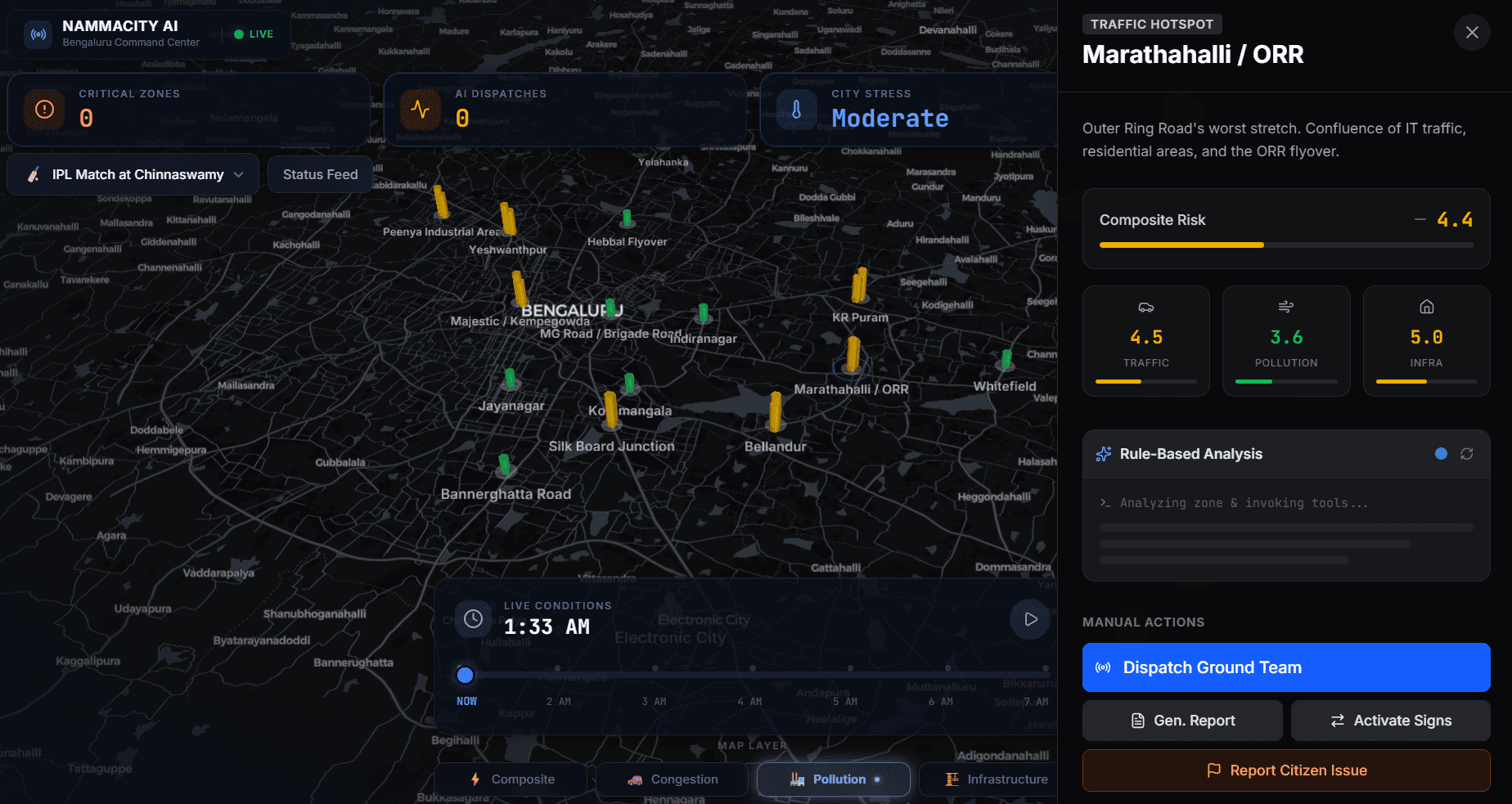
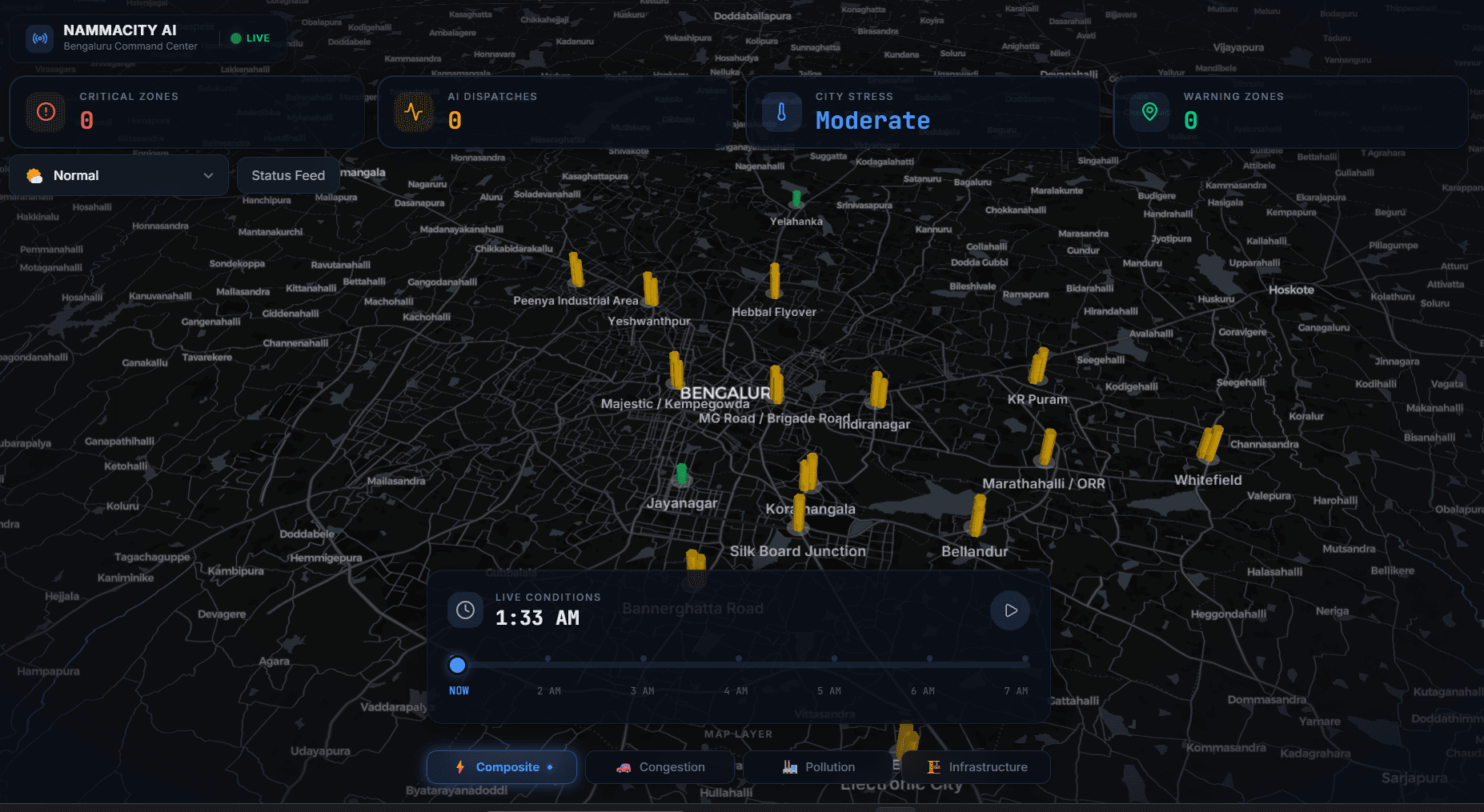
A proactive city intelligence platform for Bengaluru that combines real-time risk scoring, AI-powered agentic analysis, and an interactive 3D map dashboard to monitor traffic, pollution, and infrastructure stress across 12 urban zones.
- Role
- Solo: design and full-stack development
- Year
- 2026
- Built with
- Next.js, TypeScript, Tailwind CSS, FastAPI, deck.gl, Google Gemini API, MCP
The problem
City administrators in Bengaluru lack a unified view of urban risk. Traffic congestion, air pollution, and infrastructure stress are monitored in silos, making it nearly impossible to anticipate cascading failures — like how an IPL match at Chinnaswamy can gridlock surrounding zones while a monsoon simultaneously spikes flooding risk elsewhere.
What I built
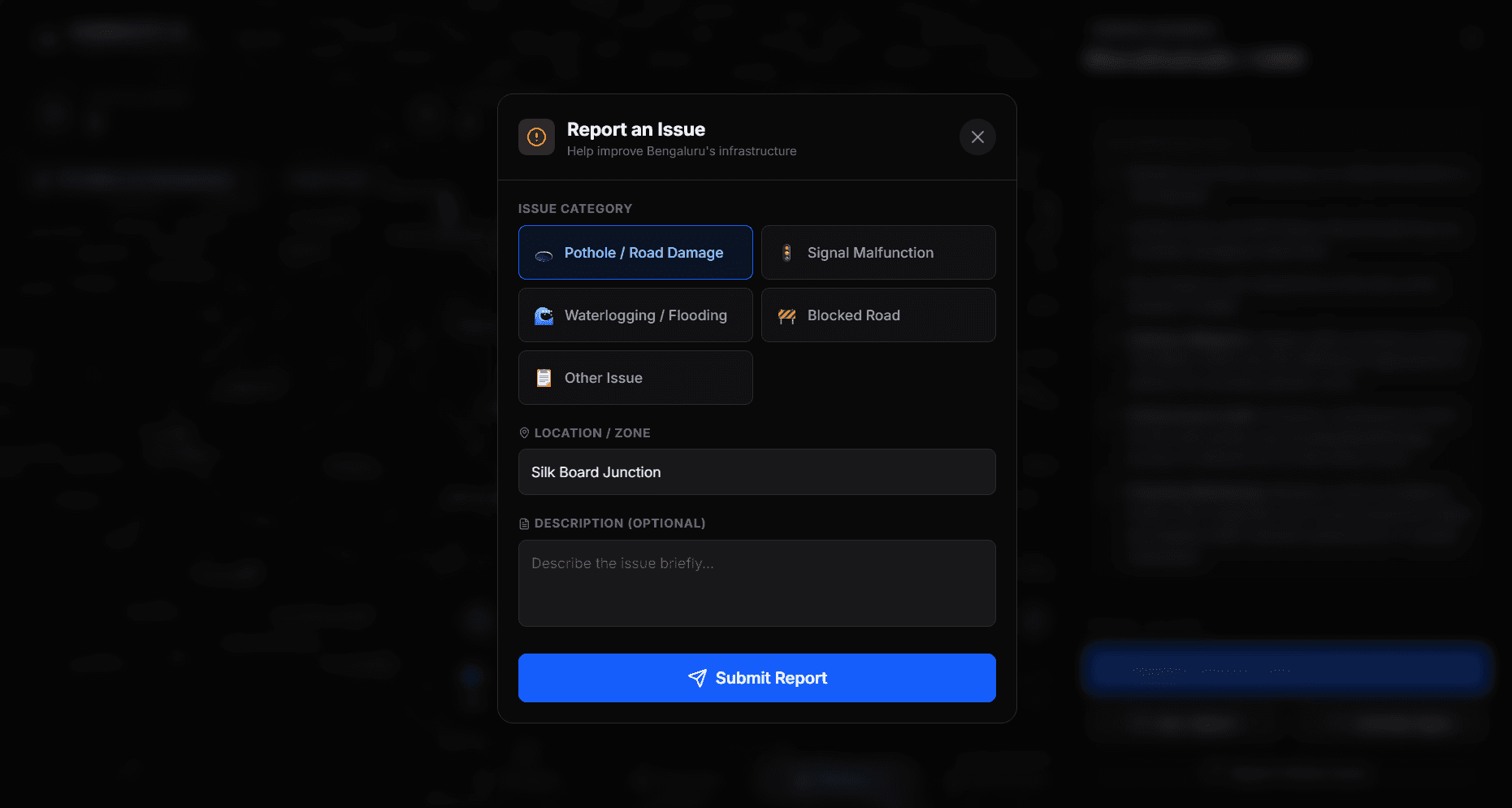
NammaCity AI is a real-time urban intelligence dashboard. It scores 12 Bengaluru zones on a composite risk index (traffic, pollution, infrastructure) with time-of-day and weather modifiers, then renders everything on an interactive 3D hexagonal heatmap using deck.gl. Users can run what-if scenario simulations (metro strike, heavy monsoon, IPL match), scrub through a 6-hour forecast timeline, and trigger an agentic AI analysis powered by Google Gemini and the Model Context Protocol — where the AI autonomously decides which tools to call, dispatches alerts to BTP stations, and generates downloadable PDF incident reports.
Outcome
The platform monitors all 12 zones in real time, computes risk scores with time-of-day Gaussian modifiers and weather impact adjustments, and supports 5 what-if scenarios for proactive decision-making. The agentic AI pipeline autonomously chains up to 8 tool calls per analysis, reducing manual triage time and providing instant, context-aware recommendations for city operations staff.